
Superfund Task Force
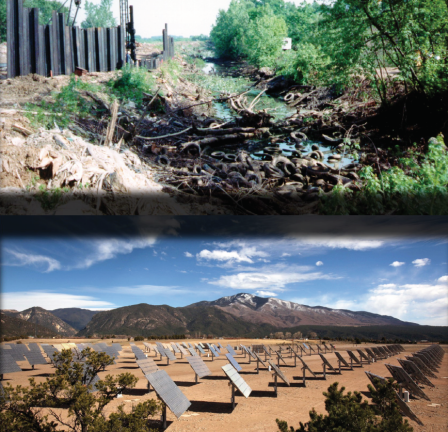 The Superfund Task Force published its final report September 9, 2019 highlighting the Task Force’s accomplishments and plans to build and expand on this important work going forward.
 Final Report and Accomplishments | Stories of Progress
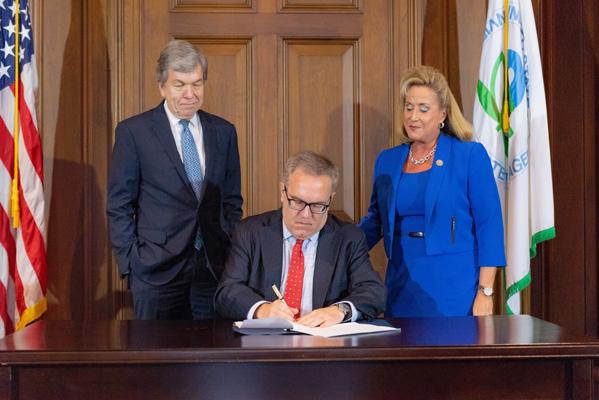 Acting Administrator Andrew Wheeler signs the Record of Decision Amendment for the West Lake Landfill site in Bridgeton, Missouri.
Press Release | Record of Decision Amendment | Fact Sheet | West Lake Site Profile Page | Signing Event Video
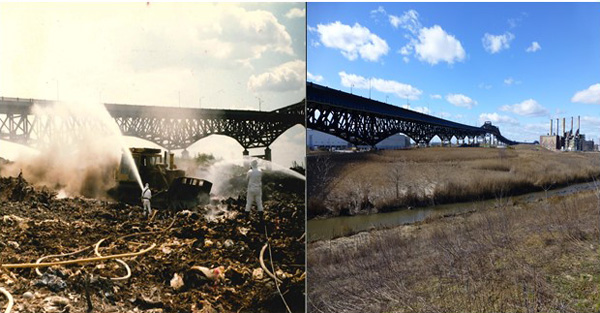 U.S. Environmental Protection Agency (EPA) Region 2 Administrator Pete Lopez presented New Jersey Department of Environmental Protection (NJDEP), Jersey City and Prologis, Inc. – the company responsible for the cleanup and reuse of the site – with the Excellence in Site Reuse Award. NJDEP Deputy Commissioner Debbie Mans, Jersey City Deputy Mayor Marcos Vigil and representatives from Prologis, Inc. accepted the Excellence in Site Reuse Award for work at the PJP Landfill Superfund site in Jersey City, N.J. The PJP Landfill Superfund site is home to a newly constructed warehouse and distribution center, continued commercial use, public open space and restored wetlands.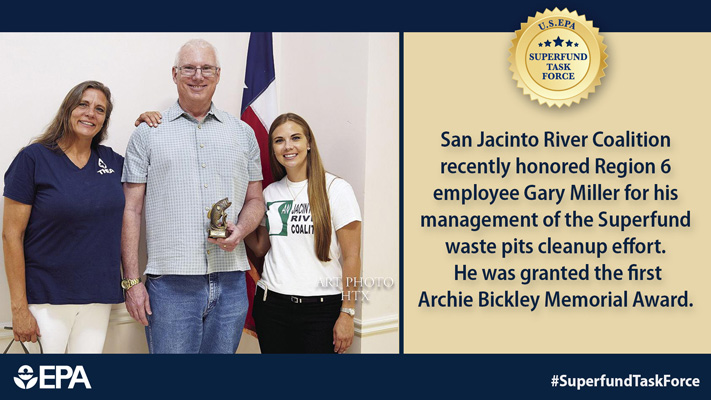
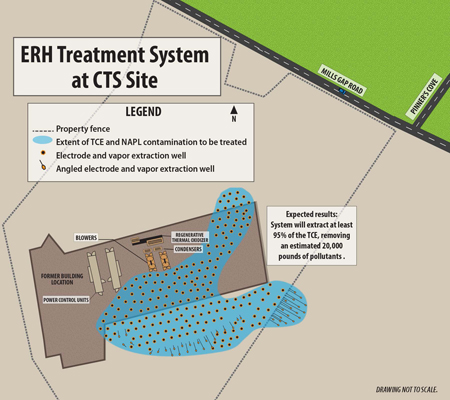 Map showing electrical resistance heating treatment system components at the CTS Site.
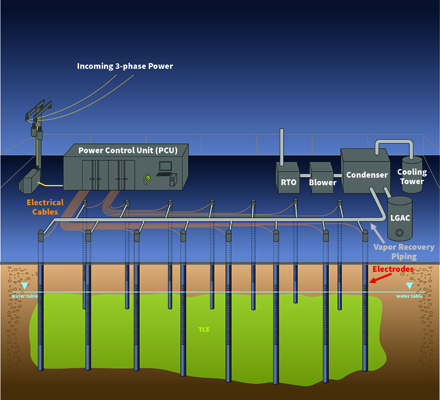 Cross-section showing how electrical resistance heating treatment works to extract contaminants from below ground and treat them above the surface. Credit: TRS Group, Inc.
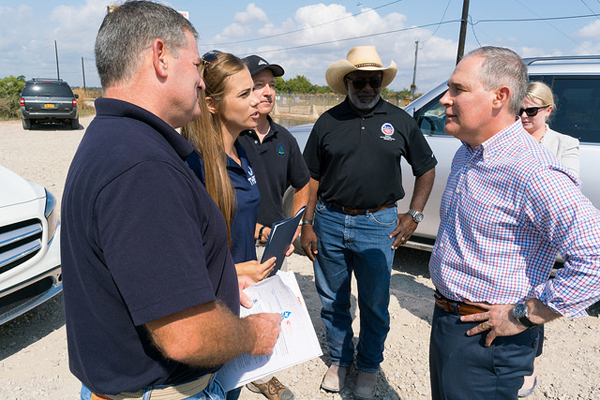 Photo of Former EPA Administrator Pruitt visiting the San Jacinto River Waste Pits Superfund Site in 2017 after Hurricane Harvey. On April 9, 2018 EPA announced that an agreement has been reached with International Paper Company and McGinnes Industrial Maintenance Corporation to perform a remedial design at the site. From left to right: Scott Jones of the Galveston Bay Foundation; Jackie Young, of the Texas Health and Environment Coalition; John Meyer, EPA; Sam Coleman, former EPA Acting Regional Administrator; Former EPA Administrator Scott Pruitt.
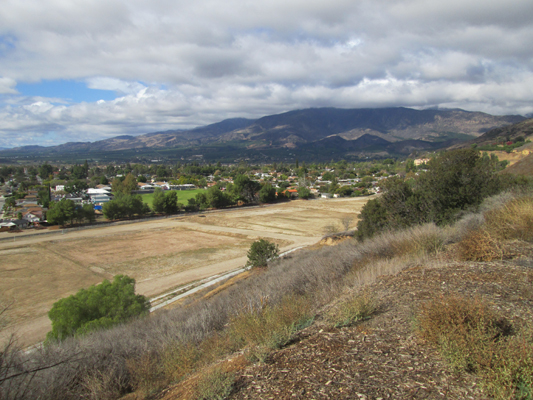 On March 22, 2018, EPA deleted the surface soil portion of the 55-acre Pacific Coast Pipeline site in Fillmore, Calif., from the Superfund National Priorities List clearing the way for commercial or recreational use.
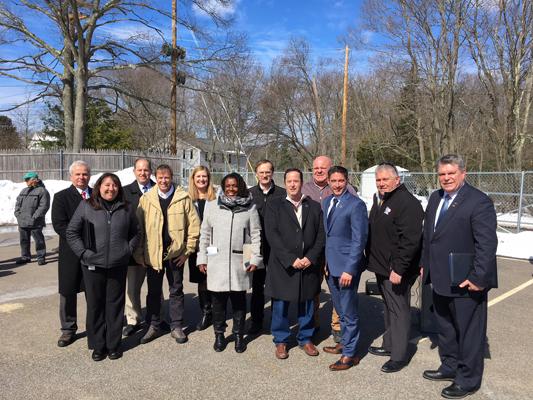 Representatives from EPA, the Massachusetts Department of Environmental Protection, and the towns of Foxborough and Mansfield gather to celebrate the deletion of the Hatheway & Patterson site from Superfund’s National Priorities List.
 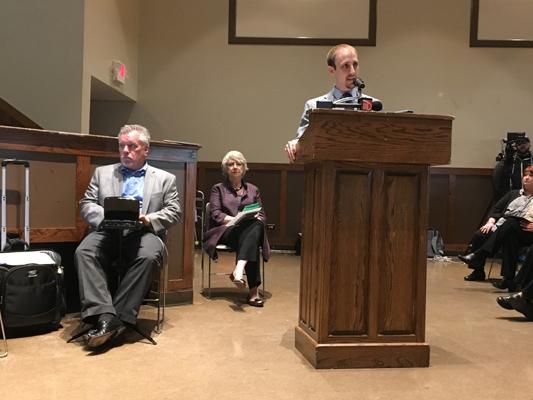 Tom Mahler, a remedial project manager from EPA’s Region 7 office, presents the proposed remedy for the West Lake Landfill Superfund site to an audience of more than 600 community members and officials in Bridgeton, Missouri, on Mar. 6, 2018.
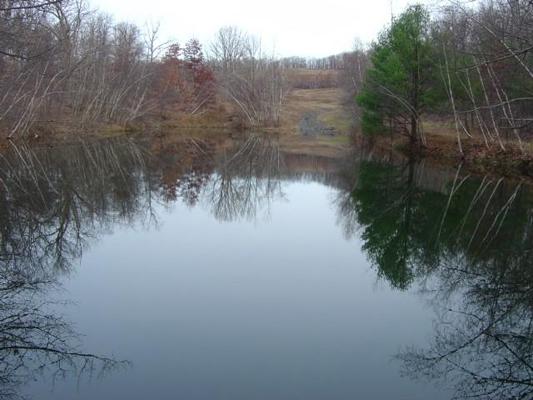 On Feb. 27, 2018, EPA deleted the C&D Recycling site in Foster Township, Luzerne County, Pennsylvania, from the Superfund National Priorities List. EPA conducted oversight of the remediation work by Nassau Metals Corporation to clean up soil and sediment contamination, and has determined the site no longer poses a threat to human health or the environment.
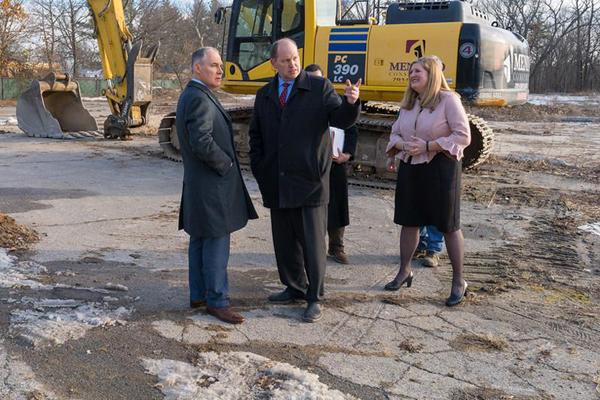 On Feb. 13, 2018, Former Administrator Pruitt toured the Mohawk Tannery site in Nashua, New Hampshire, with EPA Region 1 Administrator Alexandra Dunn and Superfund Director Bryan Olson. Mohawk Tannery is one of the 21 sites targeted by Former Administrator Pruitt for intense, immediate action. EPA’s action items for the site are to finalize a non-time critical removal action and facilitate redevelopment with interested developers.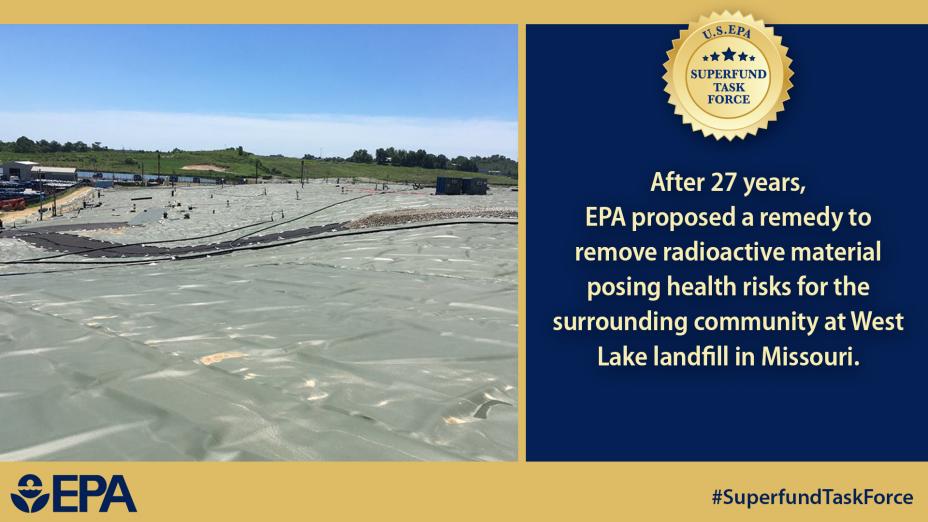
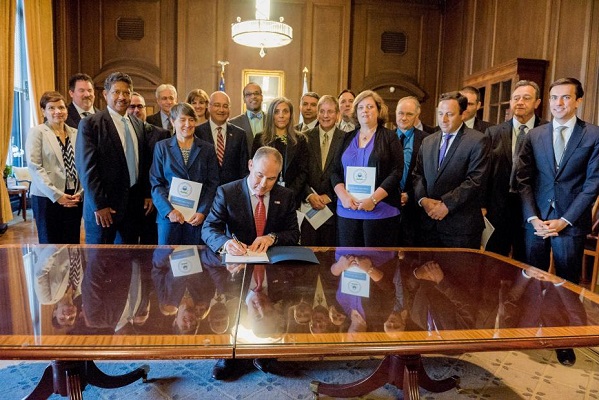 On July 25, 2017, former EPA Administrator Scott Pruitt signed the Superfund Task Force Recommendations, setting into motion a process to improve and expedite the program.
Protecting human health and the environment is EPA’s core mission. Ensuring that the Superfund program operates optimally is one of this mission’s cornerstones.
With this in mind, former EPA Administrator Scott Pruitt established the Superfund Task Force on May 22, 2017, to provide recommendations for improving and expediting site cleanups and promoting redevelopment.
Specifically, the Task Force looked at how EPA can:
- Restructure the cleanup process;
- Realign incentives of all involved parties to promote timely remediation;
- Reduce the burden on cooperating parties;
- Incentivize parties to remediate sites;
- Encourage private investment in cleanups; and
- Promote the revitalization of properties across the country while ensuring protection of human health and the environment.
On July 25, 2017, EPA’s Superfund Task Force released its recommendations, which are organized under five goals:
- Expediting cleanup and remediation;
- Reinvigorating responsible-party cleanup and reuse;
- Encouraging private investment;
- Promoting redevelopment and community revitalization; and
- Engaging partners and stakeholders.
EPA convened workgroups and actively engaged our partners and stakeholders to successfully implement the Task Force’s recommendations. The workgroups identified effective ways to implement the recommendations and reach outcome-driven results to expedite cleanups, site redevelopment, and community revitalization while protecting human health and the environment.
Final Report and Accomplishments
The Task Force released its final report in September 2019. The report covers the Task Force’s accomplishments and the Agency’s plans to build and expand on this important work moving forward.
- See the Superfund Task Force Final Report and Accomplishments
- See stories of progress at Superfund sites
Status Reports
EPA ensured that the work of the Task Force was transparent and accountable by providing quarterly updates that highlighted the accomplishments to date and the next steps for each recommendation. You can find these status reports below.
2018 Update Report
The 2018 Superfund Task Force Report highlighted the numerous accomplishments achieved by the hard-working EPA staff who planned and implemented specific actions to expedite reduction of risks to human health and the environment and to accelerate the reuse of properties affected by hazardous substance contamination.
Superfund Task Force Recommendations 2018 Update Report (PDF)(64 pp, 8.2 MB, About PDF)
Quarterly Updates
The Superfund Task Force Quarterly Reports provide a comprehensive list of accomplishments from each quarter starting from October 2017.
Please note that EPA reported accomplishments for the third quarter of FY 2018 and July 2018 in the 2018 Update Report (PDF)(64 pp, 8.2 MB), and covered August and September 2018 in the Fourth Quarter FY 2018 Report (PDF)(23 pp, 334 K).
- Task Force Quarterly Report: First Quarter FY 2019 (PDF)(24 pp, 423 K)
- Task Force Quarterly Report: Fourth Quarter FY 2018 (PDF)(23 pp, 334 K)
- Superfund Task Force Recommendations 2018 Update Report (issued in lieu of Third Quarter FY 2018 quarterly report) (PDF)(64 pp, 8.2 MB)
- Task Force Quarterly Report: Second Quarter FY 2018 (PDF)(33 pp, 1.7 MB)
- Task Force Quarterly Report: First Quarter FY 2018 (PDF)(37 pp, 617 K)
Task Force News
In addition to quarterly reports, the Task Force provided news updates as notable progress and achievements happened.
Public Participation Opportunities
The Task Force offered opportunities for the public to provide input on the Superfund process. To this end, the Task Force developed its Partnership and Stakeholder Engagement Strategy (PDF)(3 pp, 128 K). Under this strategy, EPA conducted dialogues via meetings, web discussions, and other fora. These conversations established and strengthened partnerships and public engagement during implementation of the Task Force recommendations.
